Who Will Protect Us?
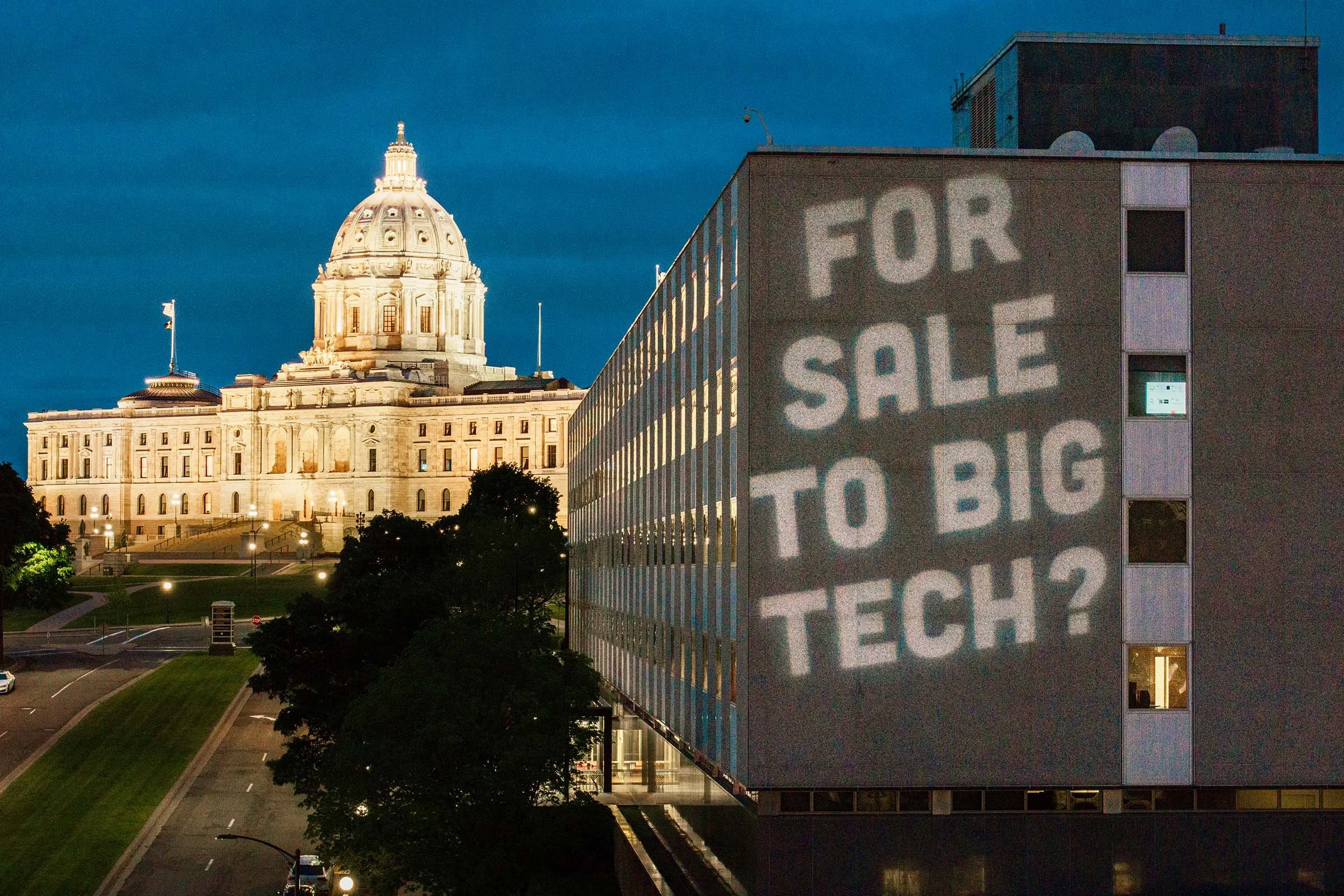
Tech billionaires are trying to build giant data centers across Minnesota. Their plans--if not well regulated--could pollute our water, drain aquifers, increase climate emissions, raise electric bills, subject neighbors to air, noise and light pollution, strain the state budget and force cuts to services people rely on. That’s why common sense measures that protect communities are urgently needed.
These facilities drain communities’ energy supply while using taxpayer subsidies to build and expand. To avoid public scrutiny, Big Tech negotiates sweetheart deals with elected officials behind close doors directly undermining our democracy.

We have the power to push back. Our movement is surging. The best time to influence elected officials is when they are running for office.
Learn more below and take action!
Protect Water
〰️
Strong Regulatory Framework
〰️
Protect Our Communities
〰️
Mandatory EIS
〰️
Ban Non-Disclosure Agreements
〰️
Repeal Taxpayer Subsidy
〰️
Protect Water 〰️ Strong Regulatory Framework 〰️ Protect Our Communities 〰️ Mandatory EIS 〰️ Ban Non-Disclosure Agreements 〰️ Repeal Taxpayer Subsidy 〰️
QUESTIONS & ANSWERS ABOUT DATA CENTERS AND THE 2026 MIDTERM ELECTIONS IN MINNESOTA
-
Every seat in the State Legislature is on the ballot this November 3rd. So is the Governor. This is an opportunity for voters to find out who will pass laws that protect us and who will continue cozying up to corporations in the tech industry.
We need to press legislative candidates on this issue. So far, no political party has maintained a consistent record on data centers. A few current legislators authored good bills to protect us from data center risks, including enforceable water permit and reporting requirements, mandatory environmental impact statements, bans on nondisclosure agreements between local governments and data center developers. But most of these bills got blocked in committees. Since those bills never made it to the House or Senate floor, it’s unclear where legislators stand on these critical issues.
-
Higher Electric Bills
Risk: Hyperscalers require huge amounts of electricity. Big Tech claims their data centers will be powered by new clean electricity, but they lobby against requirements. Big Tech also wants polluting diesel generators as “back up.” Hyperscalers in other states have siphoned off existing renewable energy. Any new air emissions will further fuel climate change and air pollution.
Response: Require clean energy from the start. Hyperscalers must meet 100% of their energy needs with new solar, wind or battery resources.
More Climate & Air Pollution
Risk: Hyperscalers require huge amounts of electricity. Big Tech claims their data centers will be powered by new clean electricity, but they lobby against requirements. Big Tech also wants diesel generators as “back up.” Hyperscalers in other states have siphoned off existing renewable energy. Any new emissions will further fuel climate change and air pollution.
Response: Require clean energy from the start. Hyperscalers must meet 100% of their energy needs with new solar, wind or battery resources – BYONCE or “Build Your Own New Clean Energy (and Efficiency).”
Secret Deals
Risk: Big Tech is pushing cities to sign Non-Disclosure Agreements (NDAs), blocking citizens from knowing project details, including end users and local impacts.
Response: Ban new NDAs and prevent those who have signed NDAs from being the lead agency for permitting decisions.
Water Depletion & Water Pollution
Risk: Hyperscalers produce heat, and can use large volumes of water for cooling. This water may be treated with chemicals that can cause pollution when discharged.
Response: Require Big Tech to pay for drinking water and wastewater treatment upgrades and use the best available water-saving systems.
Local Impacts
Risk: Hyperscalers can cause major negative social, health, and economic impacts, from noise and light pollution to new transmission lines and land use changes.
Response: Require a full Environmental Impact Statement (EIS). We can only
ensure that hyperscalers are good neighbors if they are sited properly and go through robust environmental review with ample opportunities for public engagement early and often throughout the process.
Tribal Sovereignty
Risk: Indigenous and Tribal Sovereignty must be respected both on and near treaty territories.
Response: Require hyperscalers to obtain free, prior & informed consent from Tribal Governments. For additional information about concerns from tribal nations in Minnesota and proposed responses, see the Minnesota Indian Affairs Council’s July 10th, 2026 Resolution calling for a Temporary Moratorium on the Issuance of All Permits for Hyperscale Data Centers.
Our State’s Budget
Risk: Services that people rely on could be cut further to perpetuate corporate subsidies for Big Tech owners of hyperscalers.
Response: Repeal the uncapped sales tax exemption for hyperscalers which has cost the state $134 million before a single hyperscaler has even opened.
-
Demanding Responsible Data Center Development
We advocated for a strong, clear framework for hyperscale data centers. The bottom line: if these companies want to operate in Minnesota, they should be good neighbors and meet clear standards.
These bills together create the base of that framework:
S.F. 4298/H.F. 4888: Puts a temporary moratorium on all hyperscale data centers and requires a report on potential impacts.
S.F. 3968/H.F. 2928: Establishes a data center-specific permit and requires all hyperscale data centers to undergo an Environmental Impact Statement (EIS), bring their own clean energy from the start, and make investments in grid resilience.
S.F. 3852/H.F. 3793: Creates an independent water appropriation permit for data centers and requires enforceable water use limits and efficiency requirements.
S.F. 4379/H.F. 4077: Limits the use of Non-Disclosure Agreements (NDA) to increase transparency.
S.F. 4203/H.F. 4173: Eliminates the existing sales tax exemption for qualified large-scale data centers.
While several of these bills received committee hearings (most notably the NDA bill and the large water user bill) and enjoyed bipartisan support, there wasn’t enough political will to see them across the finish line.
But this issue isn’t going away anytime soon—hyperscale data center developers and end users continue to push their data center proposals forward across Minnesota, often without community support. That’s why legislators—both current and prospective—must make this a top priority next year.
-
Data center supporters can be found across political parties. Powerful interests have influenced politicians’ willingness to support laws that would protect us from data center risks. Here are some of those divisions within the parties:
For the Democrats, the AFL-CIO opposed any new laws to protect us from hyperscale data centers in 2026. As a party, Democrats have a strong history with labor and want to avoid disagreements with that sector. For the Republicans, support for data centers at the federal level–including President Donald Trump—has caused many in the party to follow suit.
But the tide is turning. As the promises from tech billionaires go unfilled, public demand for laws to protect us from data centers risks is surging. In other states, a few Republican candidates have broken with the President on data centers. Here in Minnesota, delegates at the most recent Democratic and Republican conventions overwhelmingly passed resolutions for a data center moratorium.
-
Before the primary election, only two candidates responded when asked their position on data centers.
On the Republican side, Mike Lindell made multiple statements in this MN Reformer article. Minnesota Speaker of the House Lisa Demuth, who won her primary, did not respond. As Speaker of an evenly divided House, Demuth had more power than any other Republican Legislator to either bring data center bills to a vote or to block them from coming to vote. None of the data center bills were heard on the House floor.
On the Democratic side, Senator Klobuchar did not respond directly to the Reformer’s specific questions about the use of NDAs and local moratoriums. Instead, her spokesperson responded, saying that, “the senator will work with legislators if additional changes are necessary to protect Minnesota consumers,” and her “number one focus will be on protecting Minnesotans’ energy bills and our state’s water throughout the process.” You can decide if these responses are sufficient.
-
MYTH: Big Tech claims that hyperscale data centers will bring lots of high-paying jobs and sustained economic growth.
REALITY: Almost all of the jobs are short-term construction jobs. Unlike manufacturing plants, hyperscale data centers employ very few people on site after construction. Sustained economic growth doesn’t happen without ongoing employment.
~
MYTH: Big Tech claims to help cities by providing local property tax revenue.
REALITY: Big Tech fails to mention that they get huge subsidies from state taxpayers, and often local tax abatements. This drains our state budget and could force cuts to the services people rely on.
~
MYTH: Big Tech claims they will speed up the clean energy transition by building new clean energy like solar, wind and batteries.
REALITY: Big Tech is slowing down the shift to clean energy. Even the Wall Street Journal acknowledges that “An explosion of so-called hyperscale data centers… has upended plans by electric utilities to cut the use of fossil fuels. In some areas, that means burning coal for longer than planned.”
View this Factsheet for More Myth vs. Reality Information: “Protecting Minnesotans from Hyperscale Data Center Risks”